

Newsletter 2026.3 Index
Theme : "The Eleventh JSME-KSME Thermal and Fluids Engineering Conference (TFEC11) "
|
Turbulent drag reduction effects by streamwise traveling waves with spanwise phase shifts
 |
 |
 |
| Yuiko TOMITA The University of Tokyo |
Kohei SATO The University of Tokyo |
Ikuya KINEFUCHI The University of Tokyo |
Abstract
Facilitated transport membranes based on polyvinylamine/polyvinyl alcohol (PVAm/PVA) composites are promising candidates for CO2 capture, yet the molecular-level role of water in promoting CO2 transport through these membranes remains poorly understood. This study develops a ReaxFF reactive force field parameterized to describe the chemical reactions between CO2 and amine groups (NH2) in the presence of water within PVAm/PVA composite membranes. Training data were generated using density functional theory (DFT) calculations at the B3LYP/6-311+G** level, including geometry optimizations, transition state searches, and intrinsic reaction coordinate analyses. The ReaxFF parameters were optimized from an existing parameter set using the covariance matrix adaptation evolution strategy (CMA-ES), targeting intramolecular interactions and reaction pathway energetics with a mean absolute error below 5.0 kcal/mol. The optimized force field reproduced the bulk-phase density of PVA (1.21 g/cm3) in close agreement with the experimental value (1.19 g/cm3) and achieved mean absolute errors of 2.9 kcal/mol for intramolecular interactions and 2.2 kcal/mol for reaction pathway energies. Radial distribution functions computed with the developed ReaxFF showed excellent agreement with those obtained from the non-reactive GAFF2 force field. DFT calculations revealed that the activation energy barrier decreased from 21.0 kcal/mol without excess water to 4.8 kcal/mol with four excess water molecules, and that the reaction product HCO3- became thermodynamically more stable than the reactants under high water content conditions. Metadynamics simulations confirmed the formation of HCO3- species during a 1.0 ns trajectory without structural degradation, validating the developed force field for studying aqueous CO2 transport mechanisms in facilitated transport membranes.
Key words
Reactive Force Field, Molecular Dynamics, Facilitated Transport Membranes, Density Functoinal Theory, The Solution-Diffusoin Mechanism
Figures
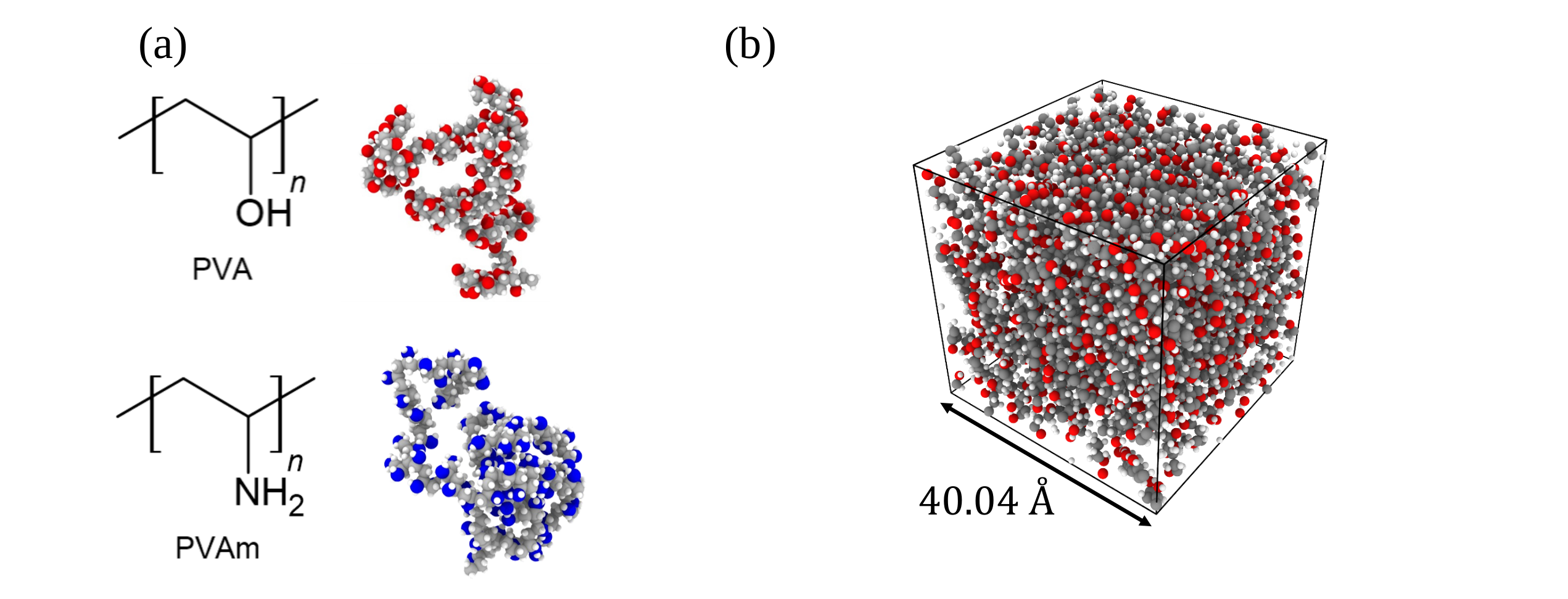
Fig. 1 (a) PVAm and PVA polymer structures. (b) A representative snapshot of PVA with a degree of polymerization of 100. Carbon, oxygen, and hydrogen atoms are represented by gray, red, and white, respectively.
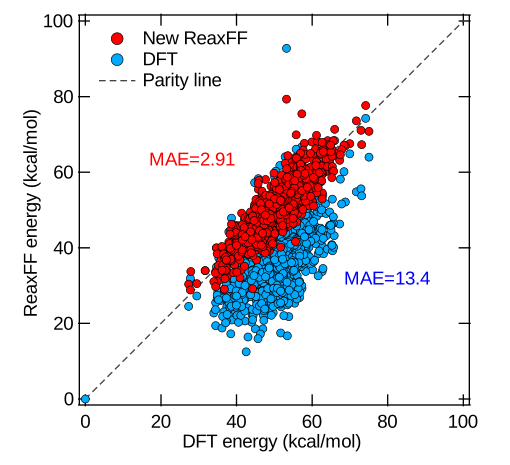
Fig. 2 Comparison of the intramolecular interactions computed by the ReaxFF and DFT for 4000 configurations of PVA with a degree of polymerization of 5.
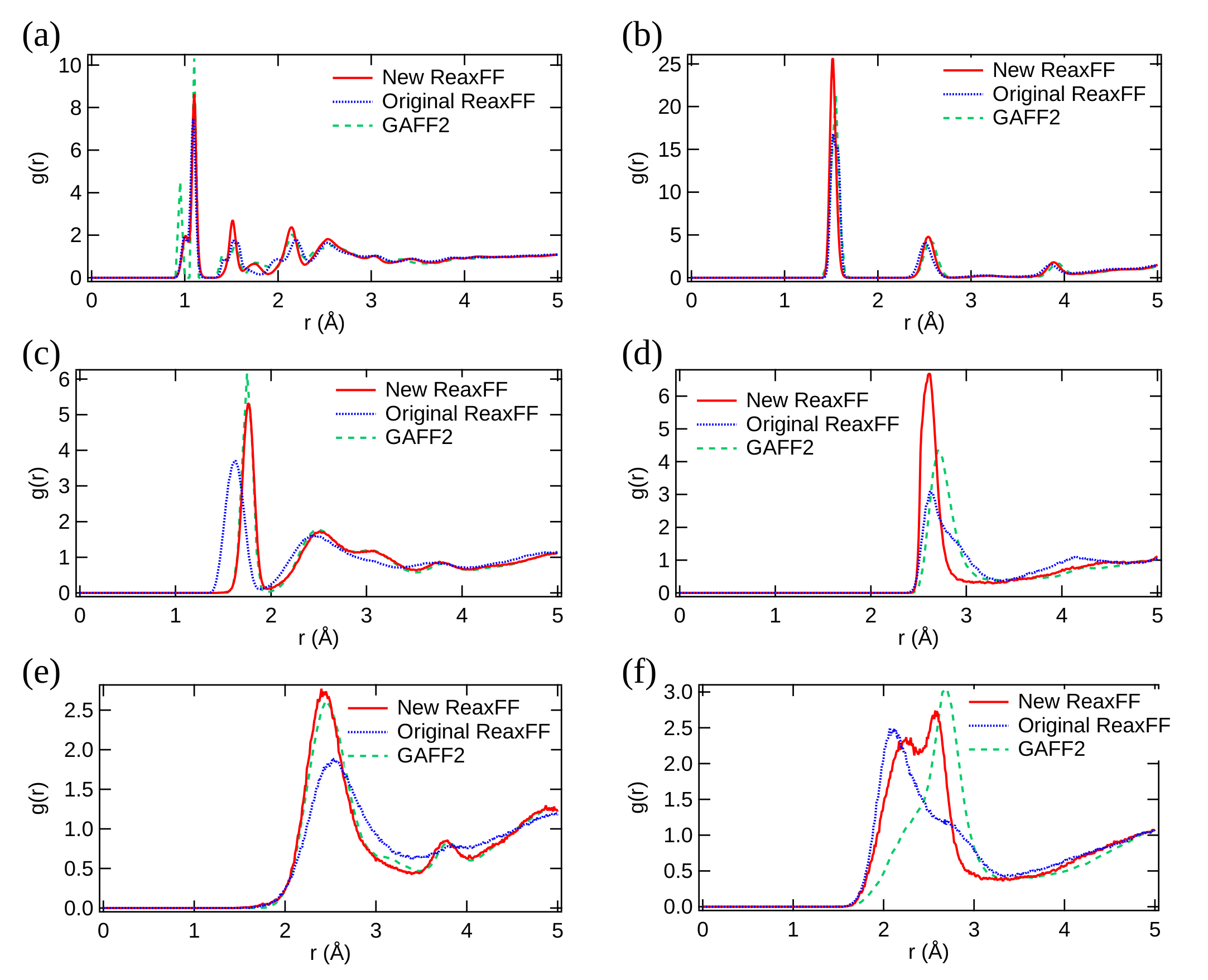
Fig. 3 Radial distribution functions of (a) all atoms (b) C atoms on polymer chains, (c) terminal H atoms, (d) O atoms, (e) H atoms on polymer chains, and (f) H atoms bonded to O atoms.
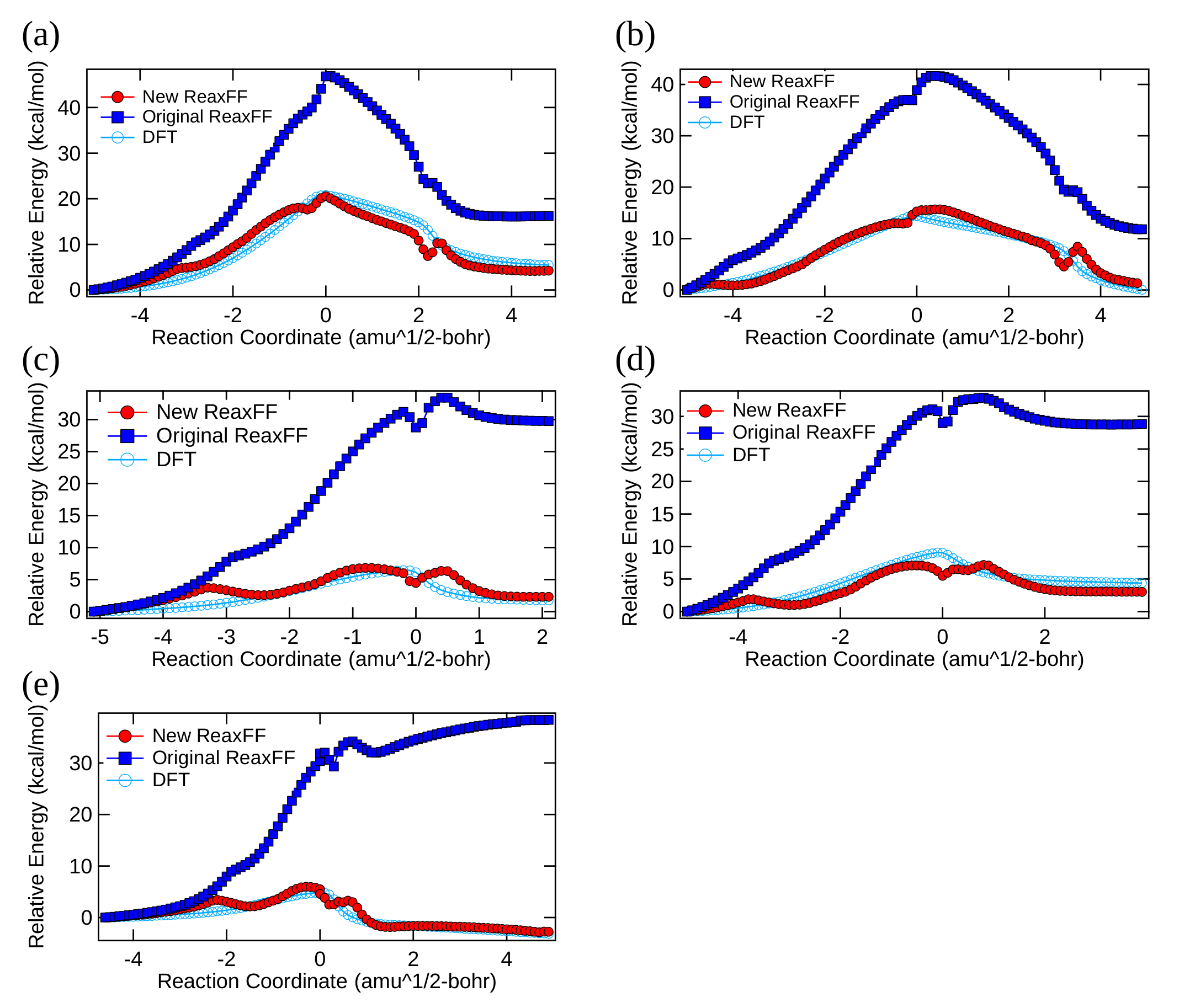
Fig. 4 Energy profiles along the reaction pathway calculated by new ReaxFF, original ReaxFF, and DFT with (a) no excess H2O, (b) 1 excess H2O, (c) 2 excess H2O , (d) 3 excess H2O , and (e) 4 excess H2O.
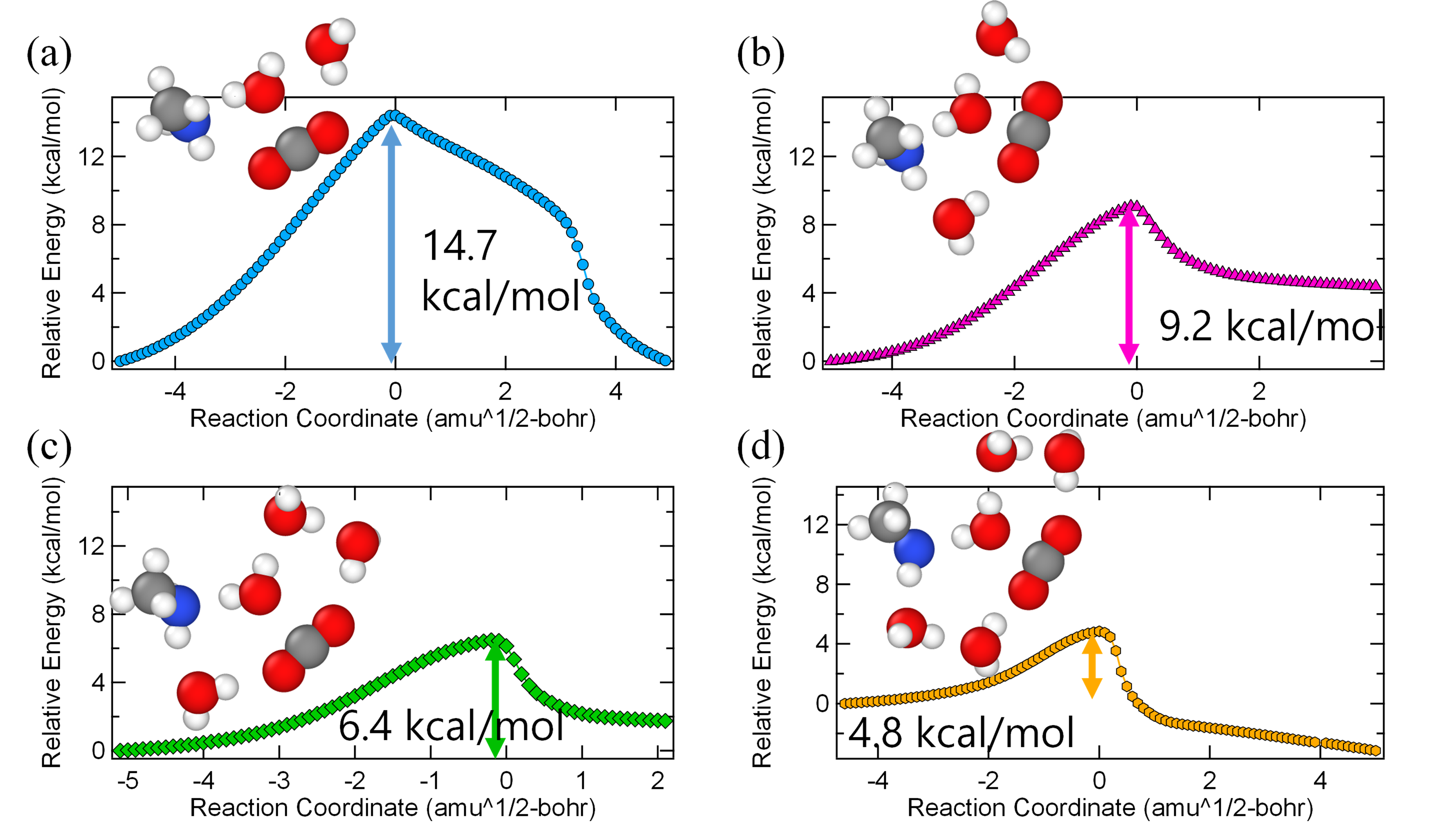
Fig. 5 A representative snapshot of reaction pathways with (a) 1 excess H2O, (b) 2 excess H2O , (c) 3 excess H2O , and (d) 4 excess H2O.
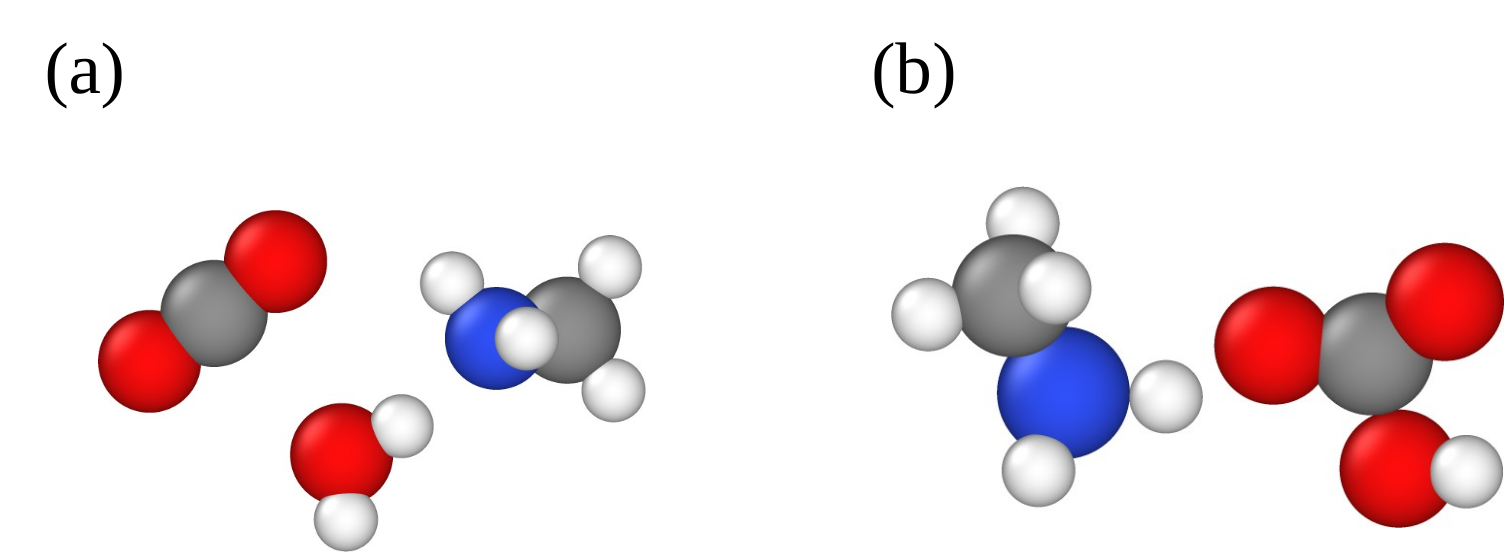
Fig. 6 A representative snapshot of reaction pathways: (a) H2O + CO2 + R-NH2, (b) HCO3- + R-NH3+. Carbon, oxygen, nitrogen and hydrogen atoms are represented by gray, red, blue, and white, respectively.